Lorry Straps for Professional Load Restraint
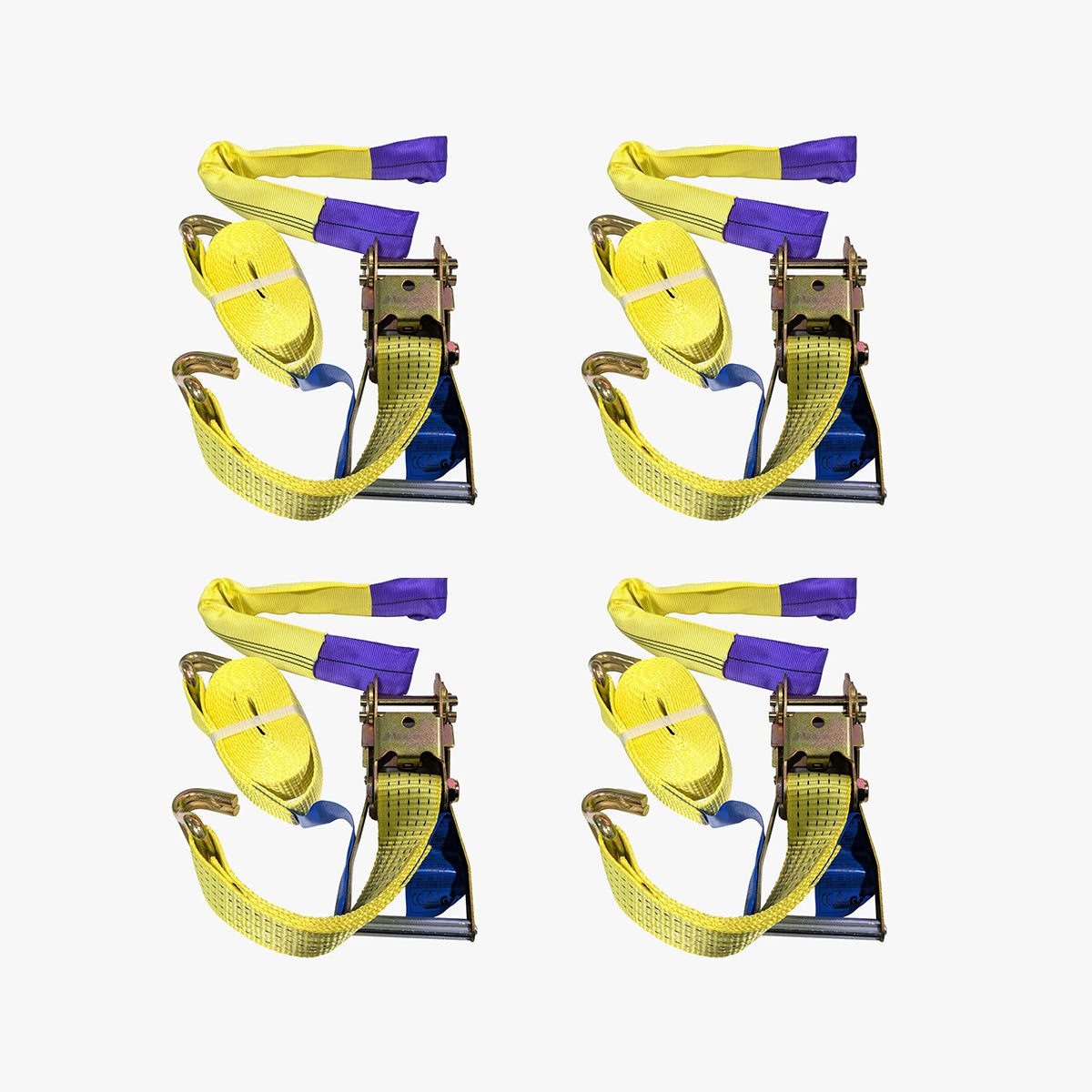
Rydam supplies professional lorry straps for securing vehicles, machinery, equipment and other cargo during transport. Our range includes heavy-duty ratchet straps in different webbing widths, lengths, end fittings and lashing capacities for use on transporters, trailers and heavy-haulage vehicles.
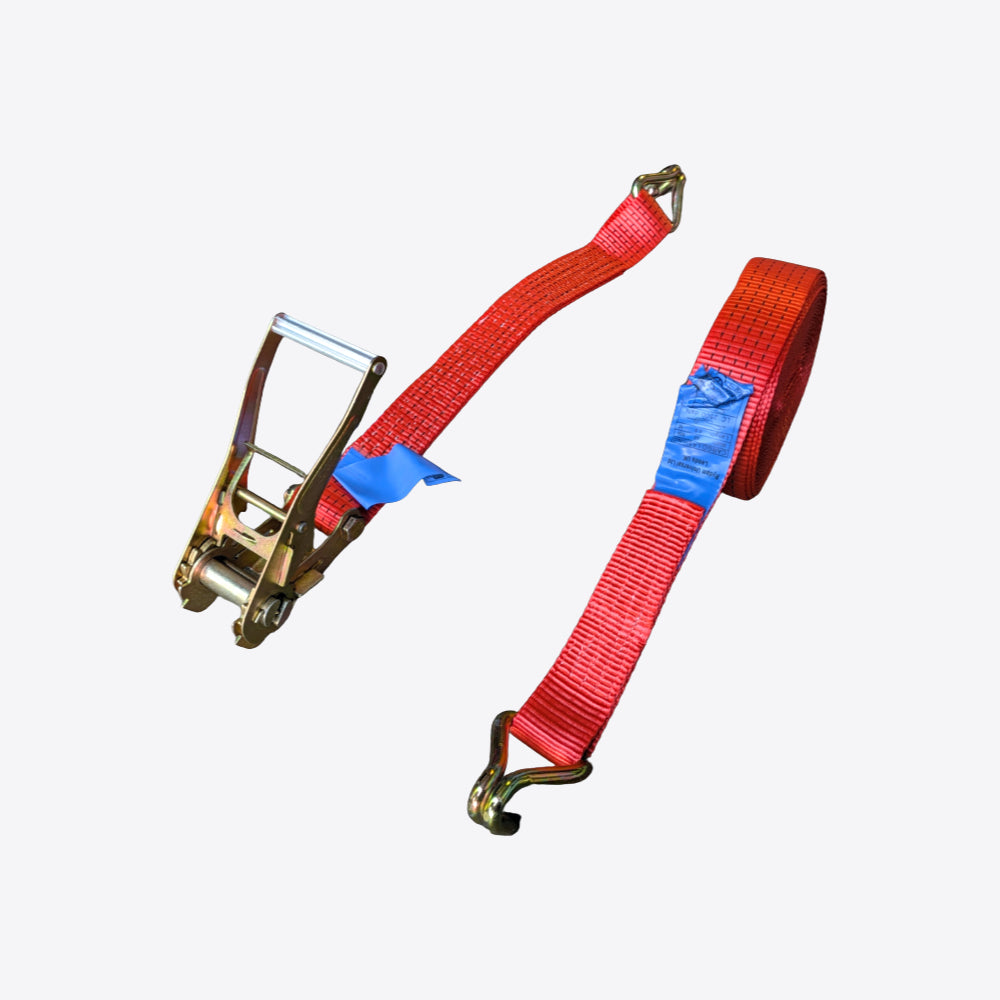
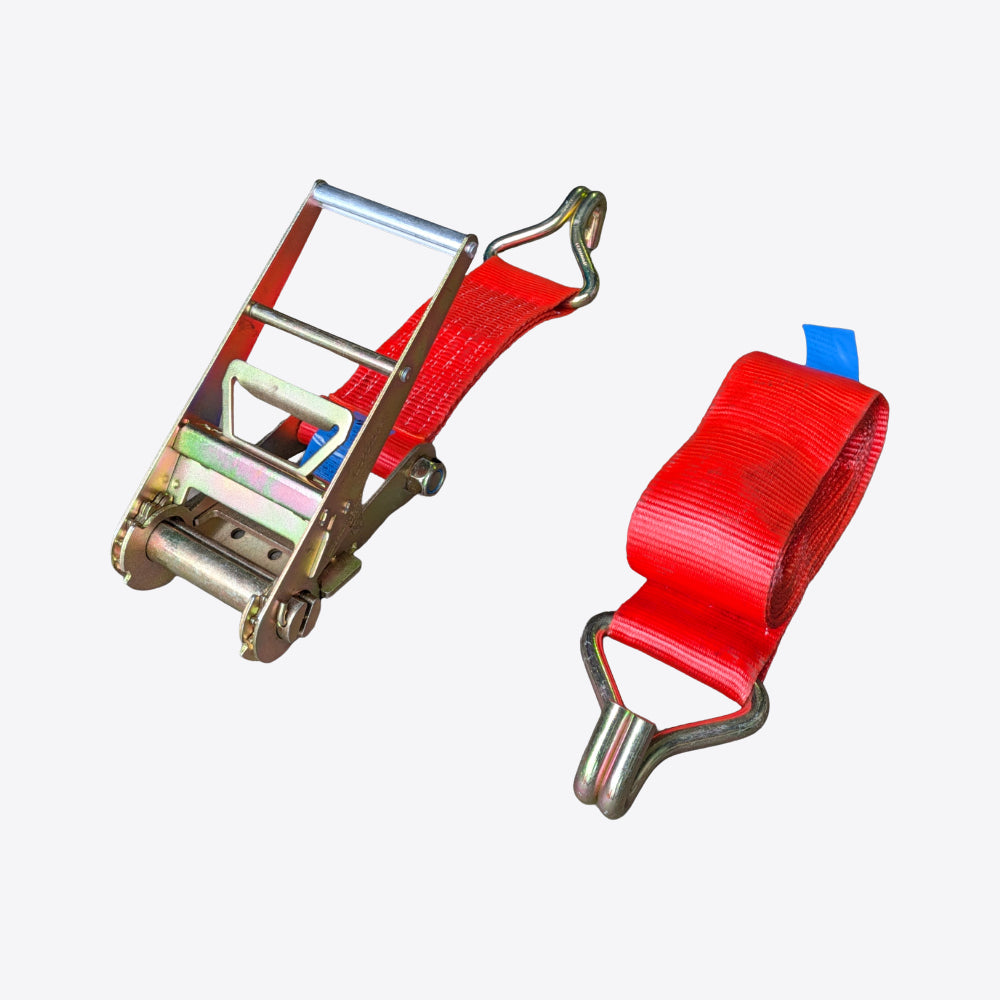
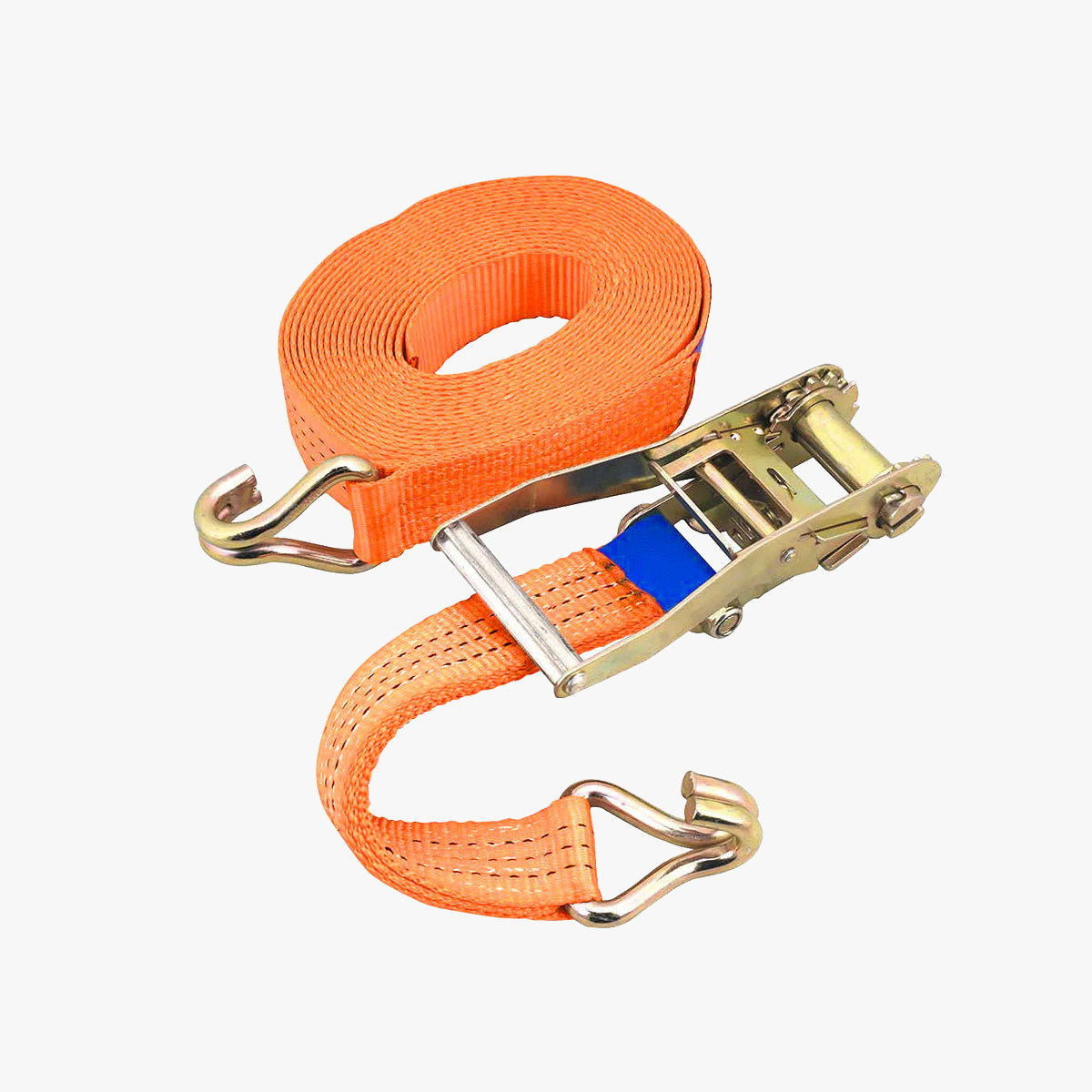
Ratchet straps provide a controlled method of applying tension to a load-restraint system. The ratchet mechanism takes up slack in the webbing, while suitable end fittings connect the strap to compatible vehicle or trailer anchorage points.
Heavy-Duty Ratchet Straps
Our ratchet tie-down straps are available in capacities from 1,000daN to 5,000daN, including 35mm and 50mm webbing options. Different configurations are available to suit lighter cargo restraint as well as demanding commercial transport applications.
Wider webbing and higher lashing capacities may be appropriate for heavier loads, but strap selection must always be based on a suitable load-restraint calculation. Never select a strap by its width, colour or appearance alone.
Ratchet Straps with Claw Hooks
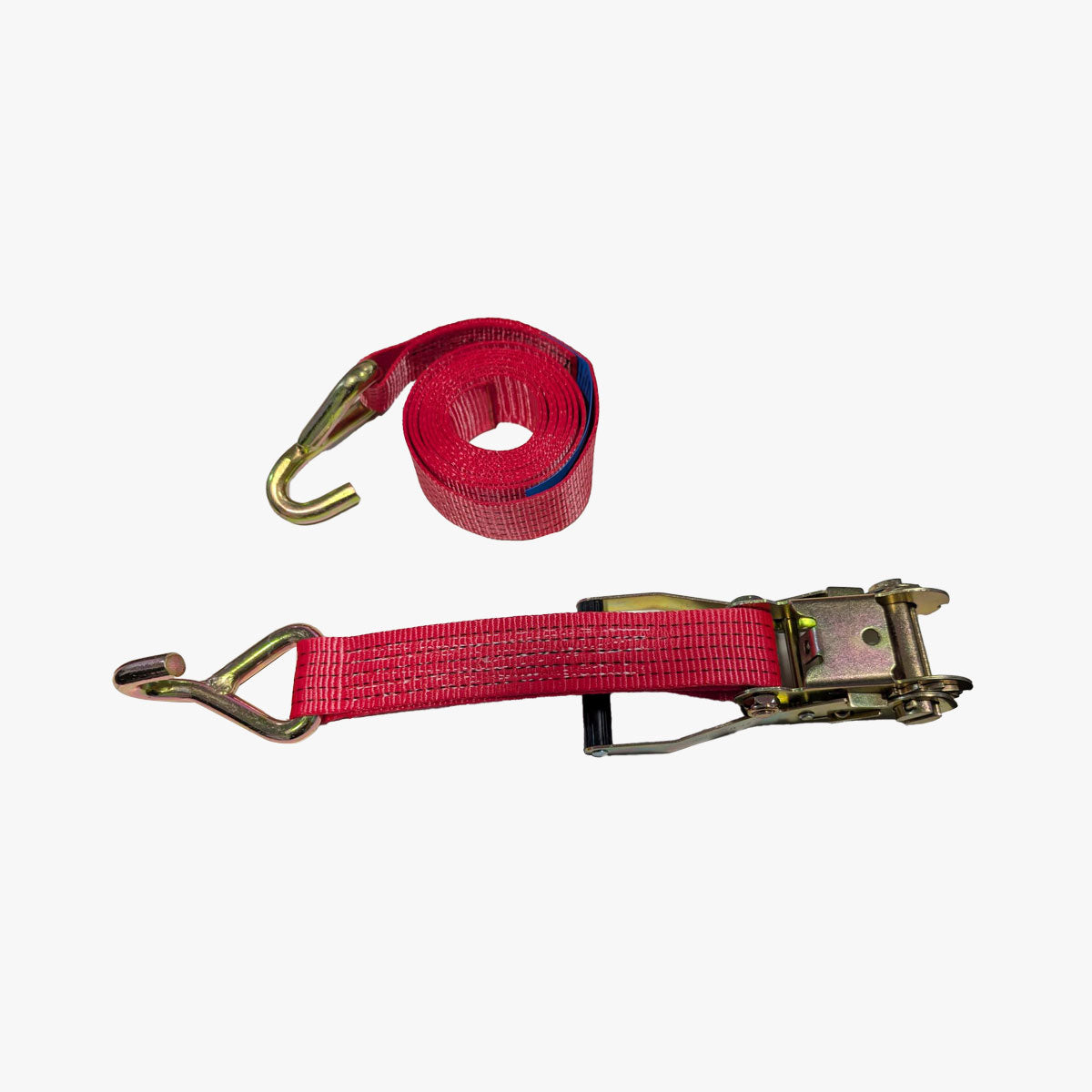
Claw-hook ratchet straps provide a convenient connection to compatible lashing points on lorries, transporters and trailers. The hooks should sit correctly within the anchorage point without twisting, binding or loading against an unsuitable edge.
Before use, confirm that the vehicle anchorage points are appropriately rated and that the hooks cannot become detached if the webbing temporarily loses tension during transport.
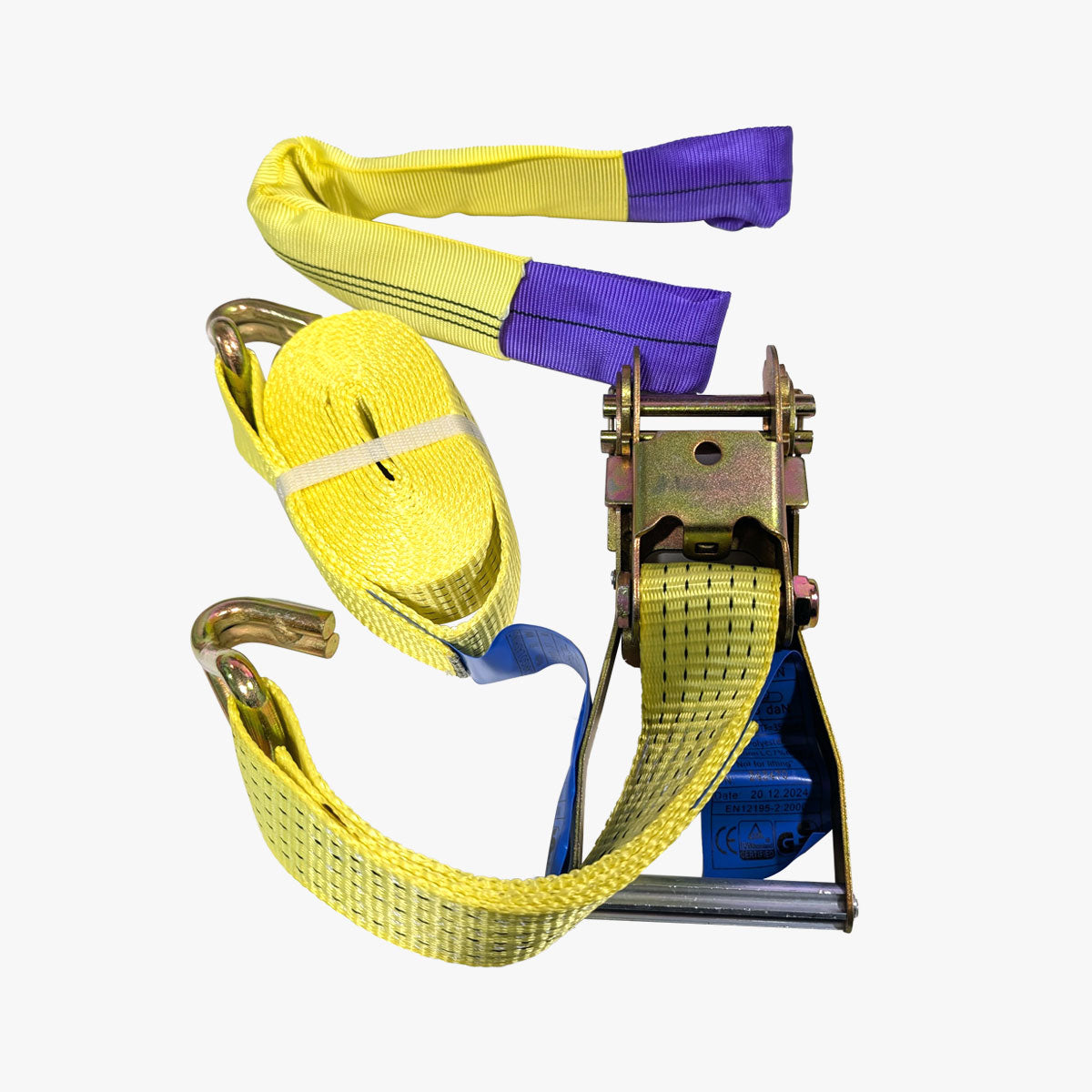
Soft-Eye Choker Ratchet Straps
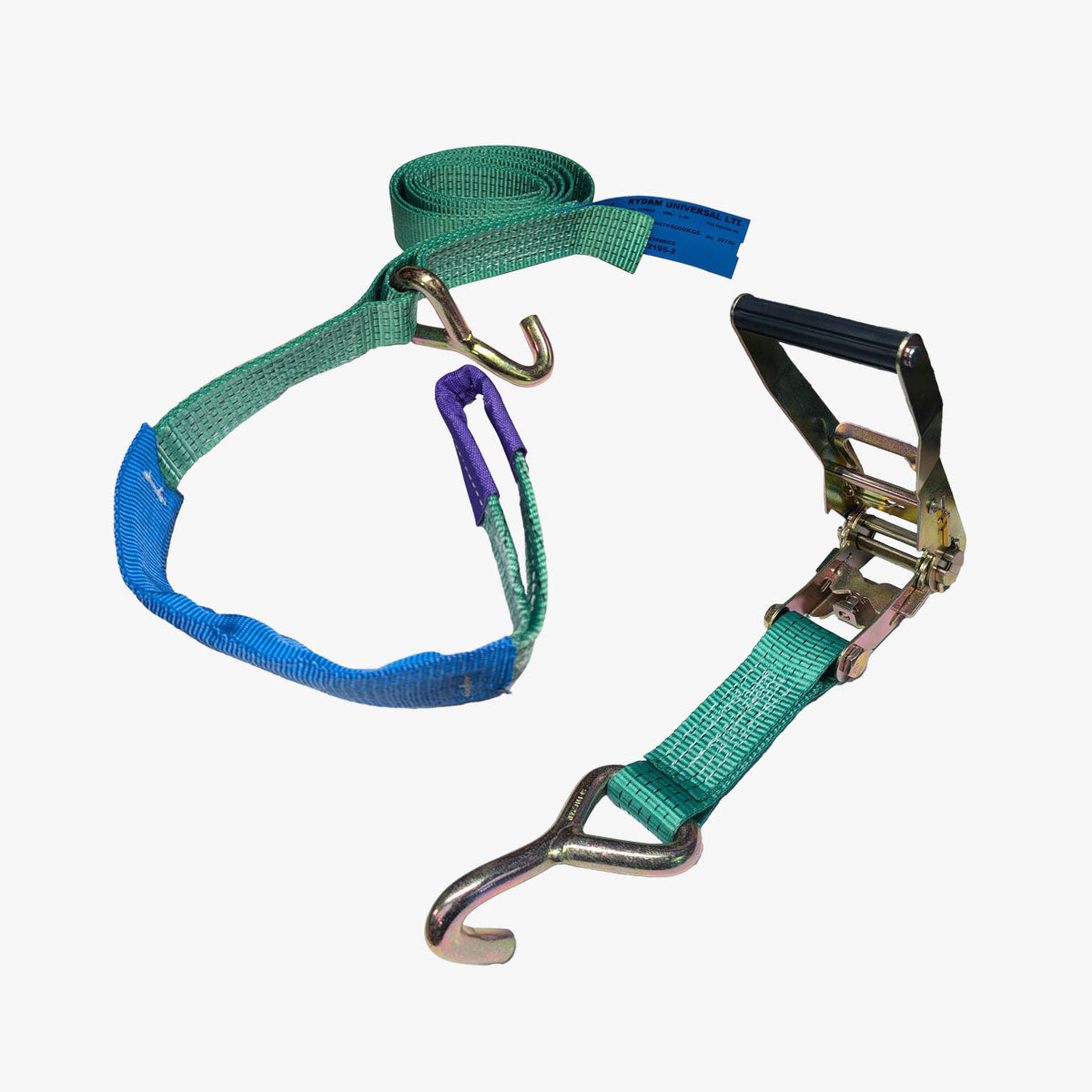
Soft-eye choker straps provide a flexible connection where a conventional metal hook is not suitable. They can be used to form a controlled connection around an appropriate attachment point while helping reduce direct metal-to-metal contact.
The soft eye must be protected from sharp edges, abrasive surfaces and excessive heat. It should not be passed around a component that could cut, crush or otherwise damage the webbing under tension.
Choosing the Correct Lorry Strap
Before choosing a lorry strap, check:
- The strap’s marked lashing capacity in daN
- The webbing width and overall usable length
- The type and rating of the end fittings
- The number of straps required for the load
- The strength and position of the anchorage points
- The weight, shape and stability of the cargo
- Possible movement caused by braking, cornering or road conditions
Lashing capacity is not the same as breaking strength or lifting capacity. The complete restraint system is limited by its lowest-rated component, including the strap, ratchet, hooks and vehicle anchorage points.
Inspection and Safe Use
Inspect every strap before use. Do not use webbing that is cut, torn, heavily abraded, chemically damaged or affected by heat. Ratchet mechanisms should move freely, and hooks and fittings should be free from cracking, distortion and excessive corrosion.
Protect the webbing from sharp edges and check the strap tension during the journey where appropriate. Do not knot the webbing, use additional handle extensions or exceed the capacity shown on the identification label.
Ratchet straps are designed for load restraint. They must not be used for lifting, suspending loads, towing or vehicle recovery unless a product is specifically designed and rated for that purpose.
For alternative heavy-load restraint systems, browse our lashing chains and load binders, or contact Rydam for help choosing the appropriate straps and fittings.