Choosing the Right Recovery Winch
A recovery winch must suit the vehicle, load, electrical or hydraulic system
and working conditions. Rydam supplies recovery winches for commercial
recovery trucks, transporters, trailers, 4x4s, ATVs, UTVs, plant and
agricultural machinery. The range includes compact electric winches and
heavy-duty hydraulic winches for demanding professional applications.
Before choosing a winch, consider the required pulling capacity, mounting
position, available power supply, rope type and frequency of use. The weight
of the vehicle or load is only one factor. Gradient, surface conditions,
rolling resistance and the number of rope layers on the drum can all affect
the pulling force required.
Electric and Hydraulic Recovery Winches
Electric Winches
Electric winches are powered by the vehicle’s battery and are available in
12V and 24V configurations. A 12V electric winch is commonly used on 4x4s,
ATVs, UTVs, trailers and other 12V vehicles. Heavy-duty 24V electric winches
are suited to many recovery trucks, transporters and commercial vehicles
with 24V electrical systems.
Electric winches are a practical choice where straightforward installation,
independent operation and occasional or regular recovery use are required.
The vehicle battery, alternator, cabling, isolators and mounting structure
must all be suitable for the winch and its expected workload.
Hydraulic Winches
Hydraulic winches are powered by a compatible hydraulic system and are
typically selected for frequent, sustained or heavy-duty recovery work.
They are widely used on professional recovery vehicles and specialist
equipment where dependable operation under demanding conditions is
essential.
Choosing a hydraulic winch requires careful consideration of hydraulic flow,
operating pressure, line speed, clutch configuration and mounting. The
vehicle’s hydraulic system must be correctly matched to the selected winch.
Recovery Truck Winches for Professional Operators
Recovery truck winches must perform reliably during vehicle loading,
roadside recovery and specialist transport work. Rydam’s range includes
electric and hydraulic options for new vehicle builds, replacement
installations and recovery equipment upgrades.
Professional operators should compare rated line pull, rope capacity, line
speed, duty cycle and control options. The maximum rated pull is generally
measured on the first layer of rope around the drum and reduces as additional
layers build up. Always check the manufacturer’s specification for the exact
model and installation.
You can also browse our
heavy recovery equipment
for related towing, lifting and recovery products.
Steel Wire Rope or Synthetic Winch Rope?
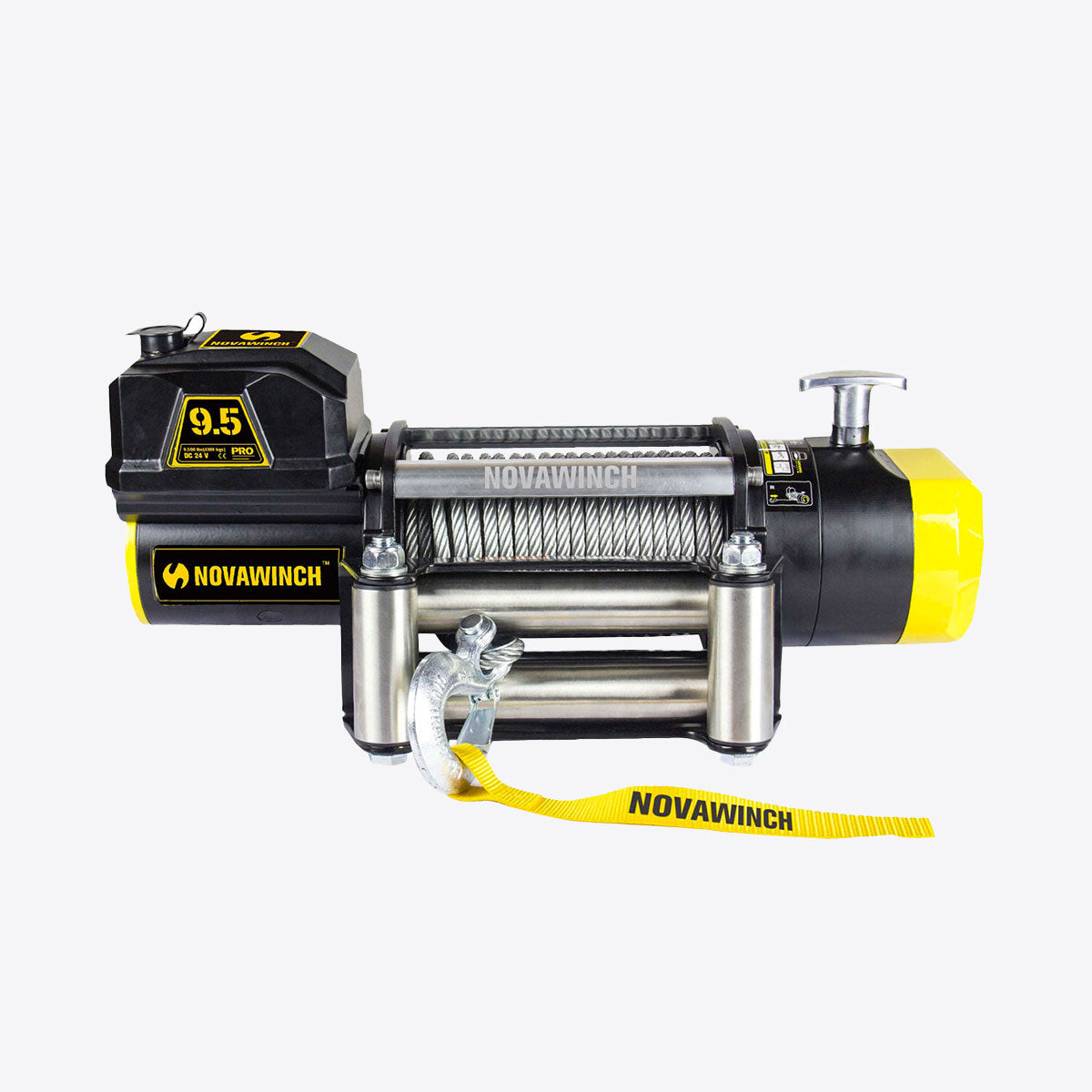
Steel wire rope offers strong resistance to abrasion and is widely used in
commercial recovery environments. It is heavier to handle and should be
inspected regularly for corrosion, broken wires, crushing and other damage.
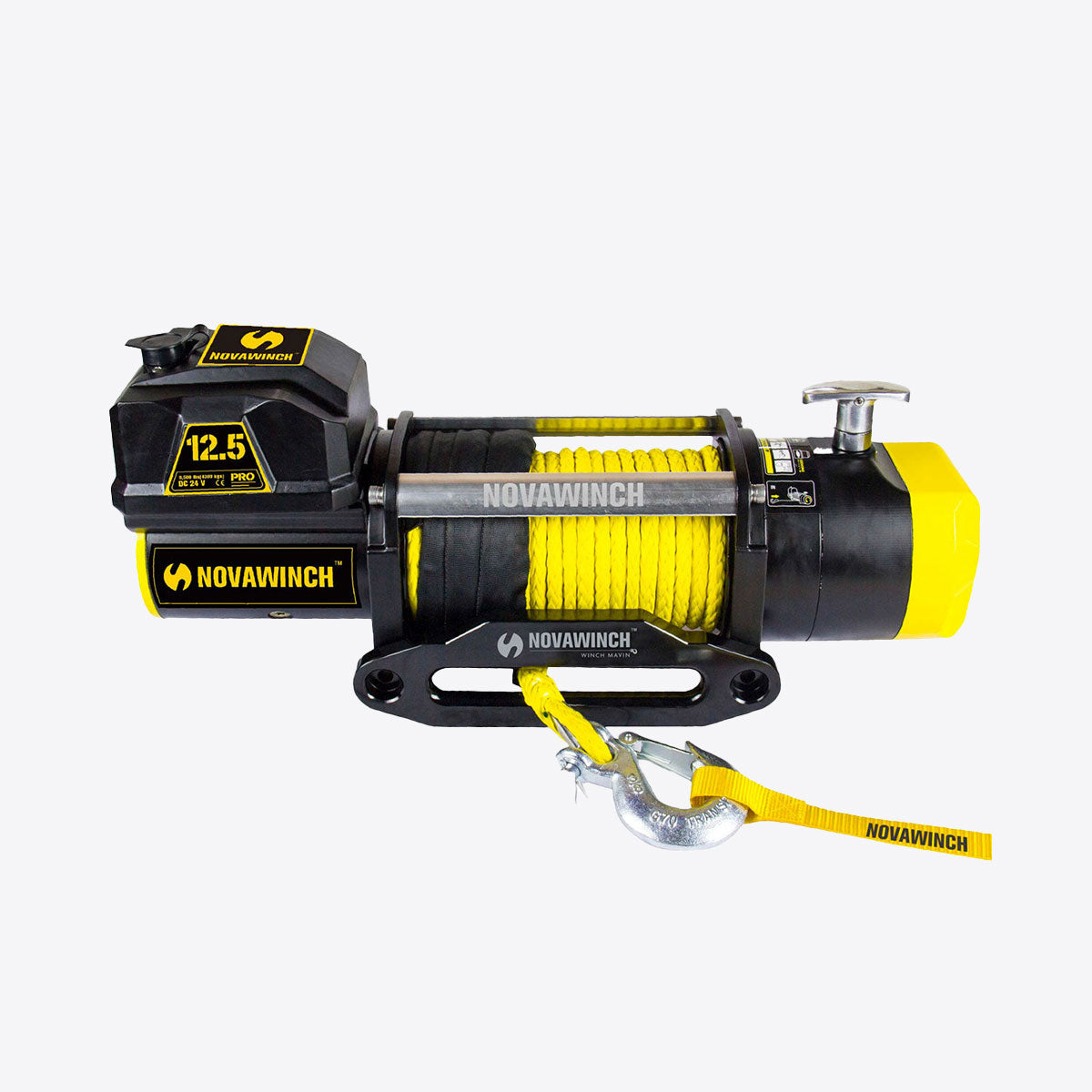
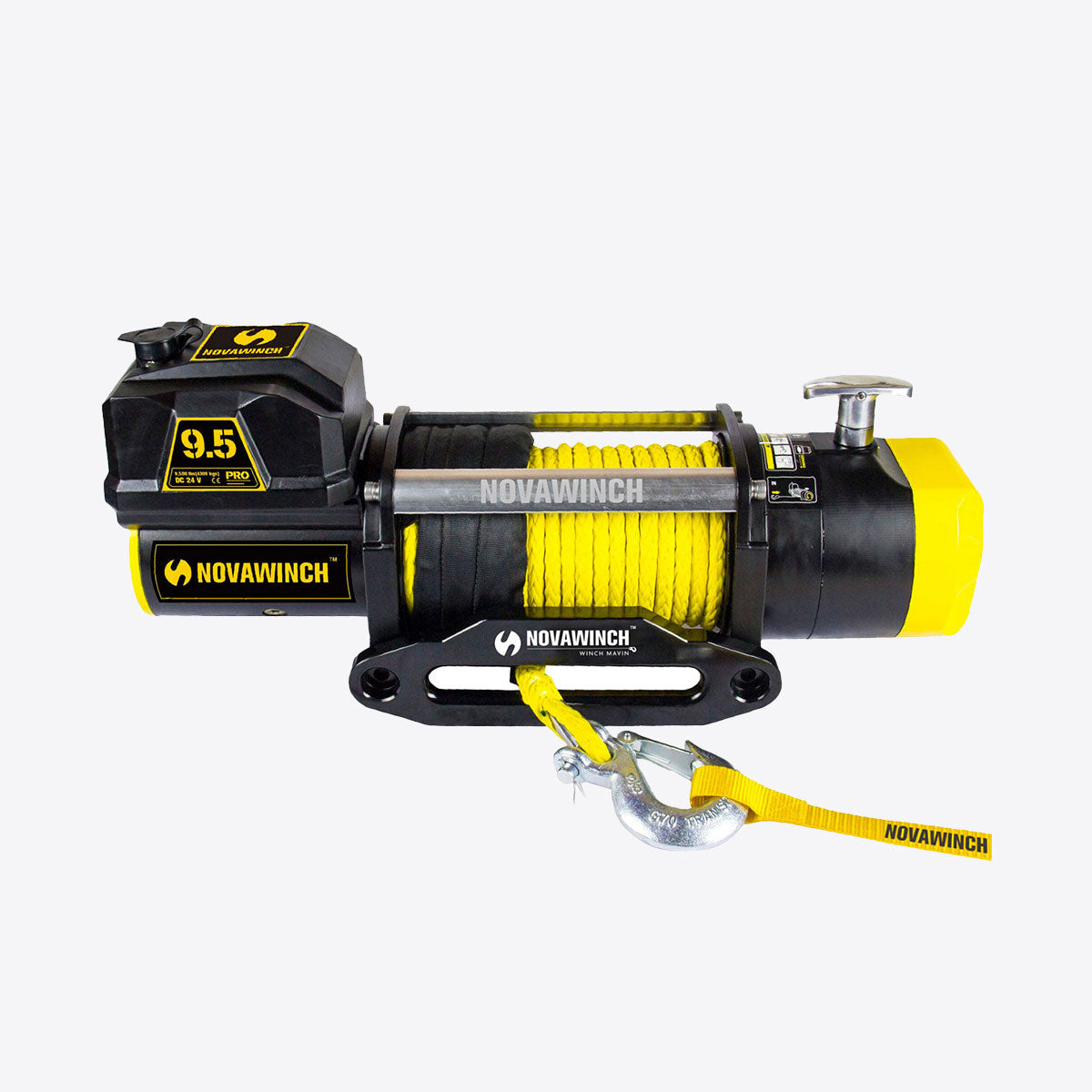
Synthetic winch rope is lighter and easier to handle, making it popular for
many 4x4, trailer and vehicle-recovery applications. It should be protected
from sharp edges, excessive heat, contamination and abrasion. The correct
fairlead must be used for the selected rope type.
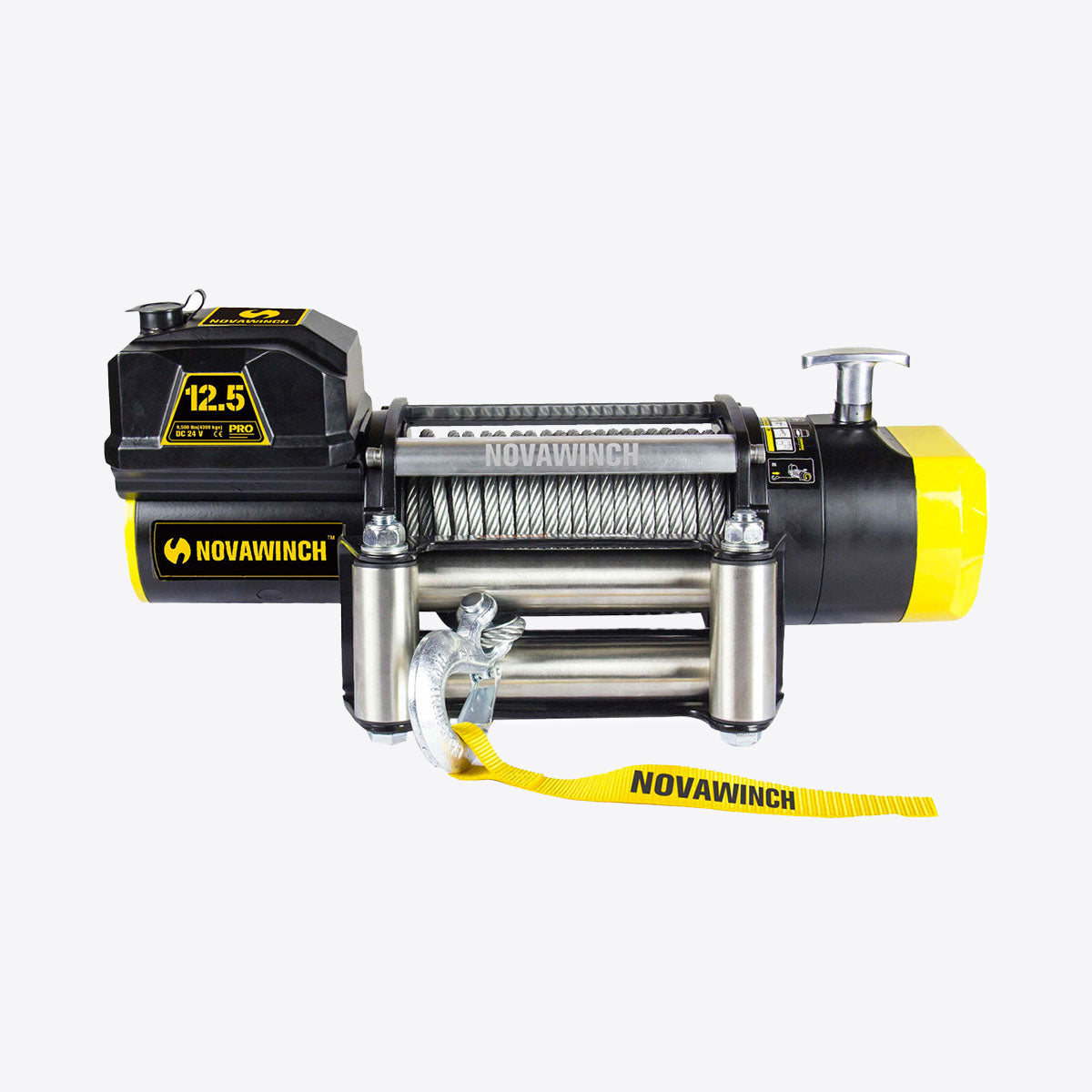
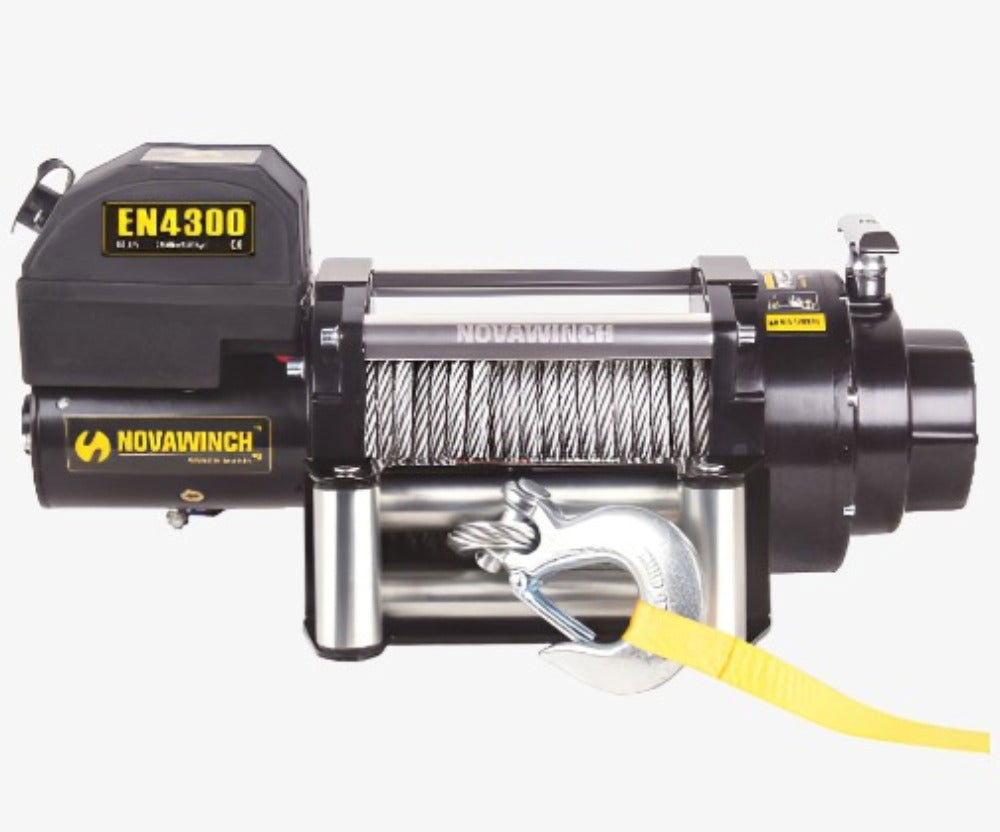
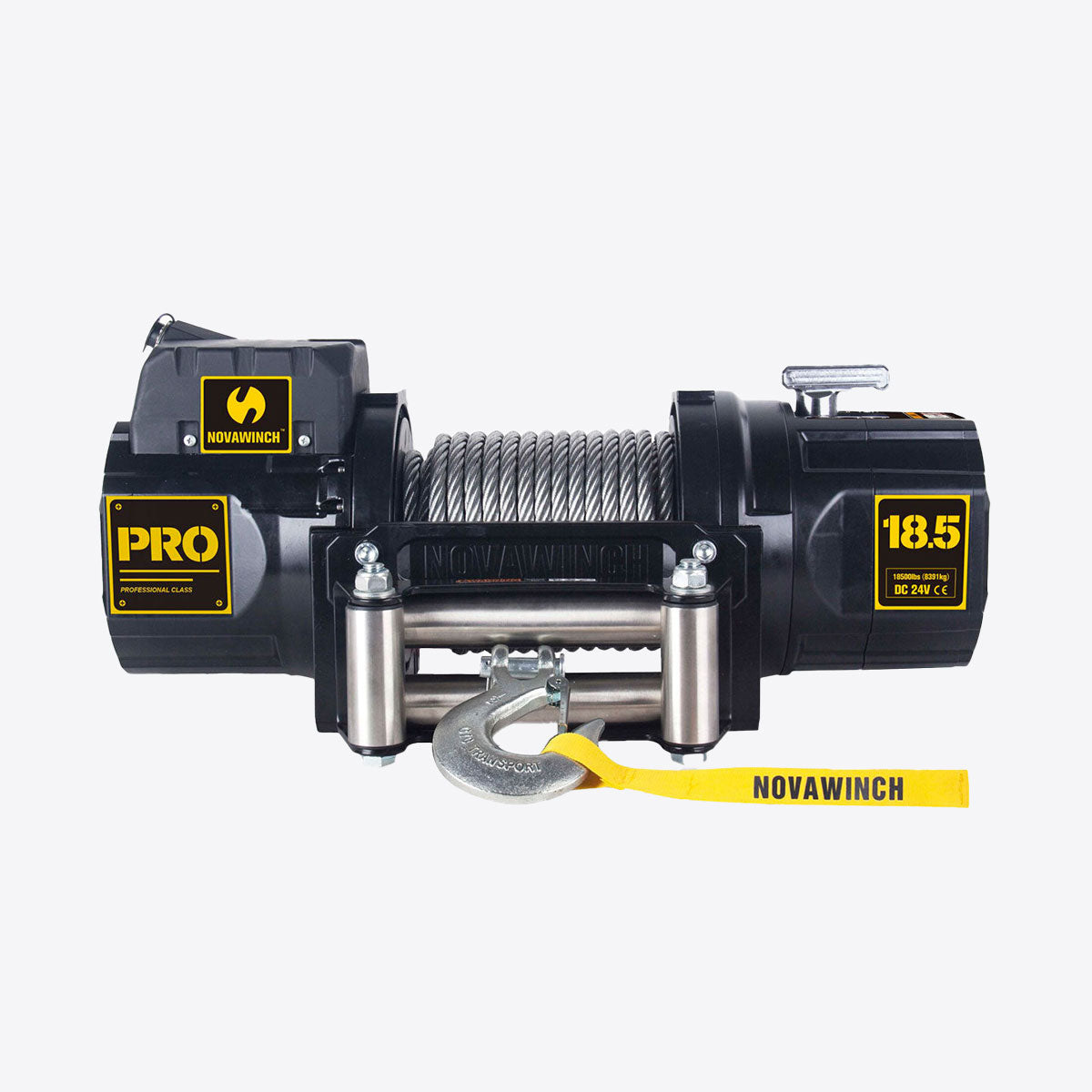
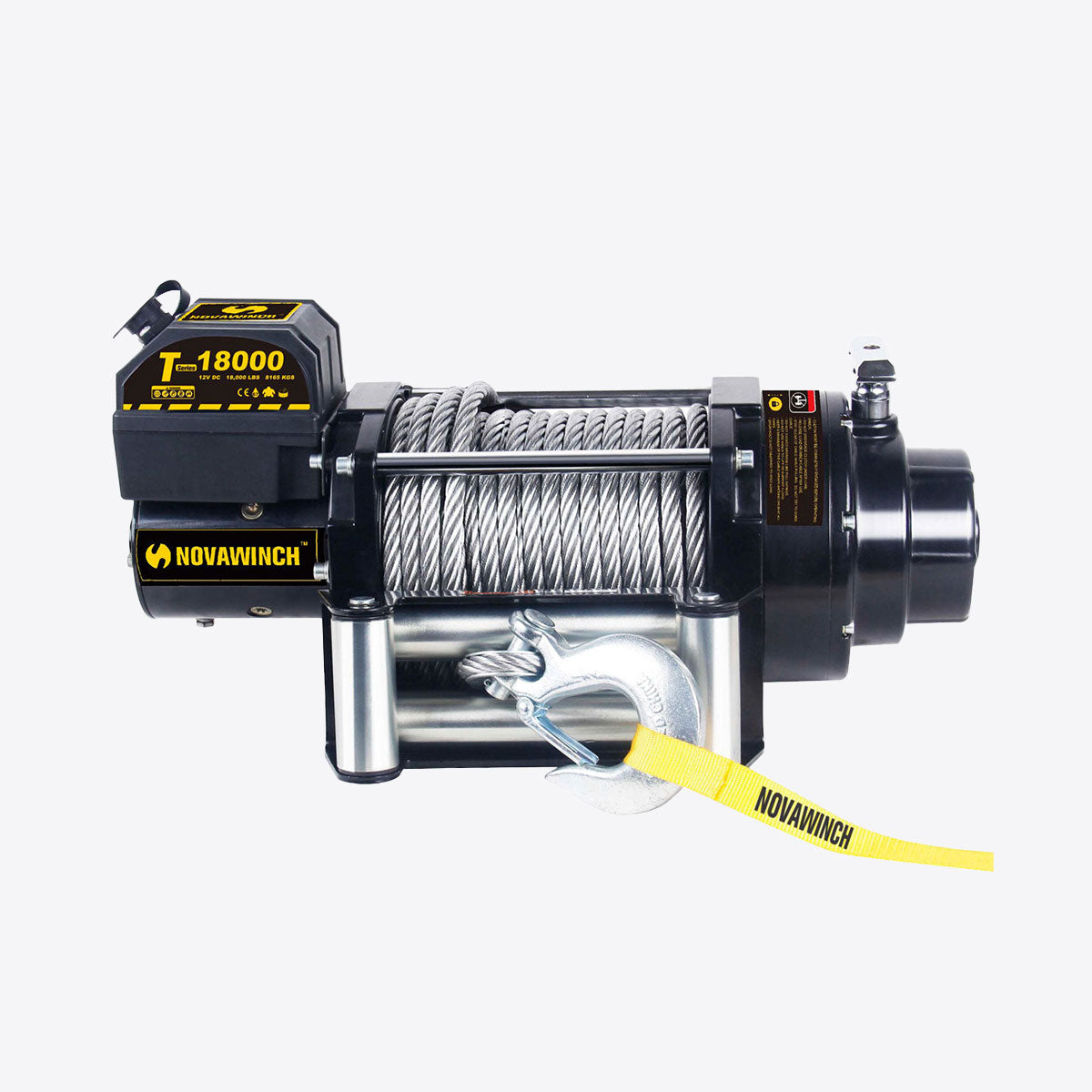
Novawinch Recovery Winches
Rydam supplies a broad selection of
Novawinch recovery winches,
including electric and hydraulic models for vehicles ranging from ATVs and
4x4s to commercial recovery trucks. Products are available with different
voltages, pulling capacities, rope types and control configurations, allowing
buyers to compare models against their intended application.
Recovery Winch FAQs
Should I choose a 12V or 24V electric winch?
Choose a voltage that matches the vehicle’s electrical system. Many 4x4s,
ATVs and lighter vehicles use 12V systems, while commercial recovery trucks
and larger vehicles commonly use 24V systems. Confirm the vehicle voltage,
available battery capacity and electrical requirements before ordering.
Is an electric or hydraulic winch better for a recovery truck?
The right choice depends on the vehicle and expected workload. Electric
winches can offer straightforward installation and independent operation.
Hydraulic winches are often preferred for frequent or sustained professional
use where a compatible hydraulic system is already available.
How do I choose the correct winch capacity?
Consider the loaded weight, rolling resistance, gradient, surface conditions
and recovery method rather than vehicle weight alone. Mounting strength,
rope capacity and pulley arrangements also matter. Check the manufacturer’s
ratings and seek technical advice when selecting equipment for professional
recovery work.
Can you help me choose a recovery winch?
Yes. Tell us about the vehicle, power supply, intended application, expected
loads and preferred rope type. For help selecting a suitable model,
contact our technical team.